

 By
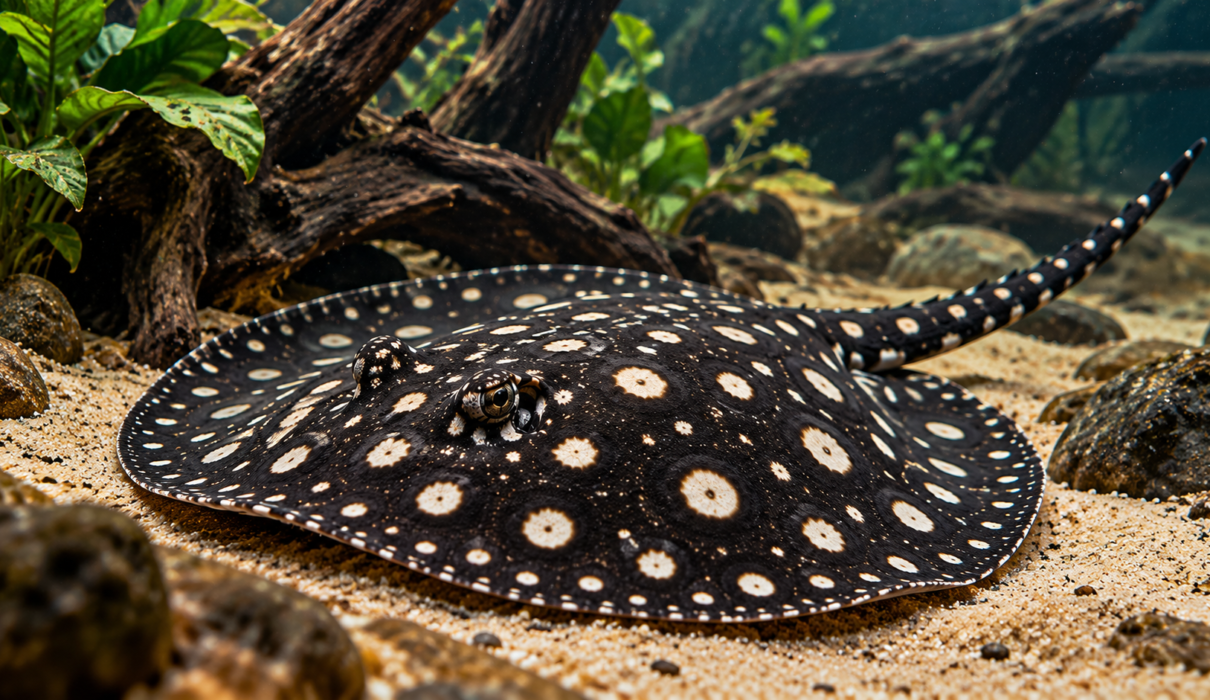
Imagine looking into an aquarium and seeing a dark freshwater ray covered in bright white spots, gliding across the bottom like a living underwater UFO. 👽🌊
That’s the Polka Dot Stingray, a common name associated with the Xingu River ray, Potamotrygon leopoldi.
It’s not your typical aquarium fish. This unusual freshwater ray has an incredible pattern, fascinating biology, and some serious care requirements.
Let’s dive in! 🐟
⚫ What Is a Polka Dot Stingray?
Potamotrygon leopoldi is a freshwater stingray in the family Potamotrygonidae.
It’s also known as the Xingu River ray or Black Diamond stingray.
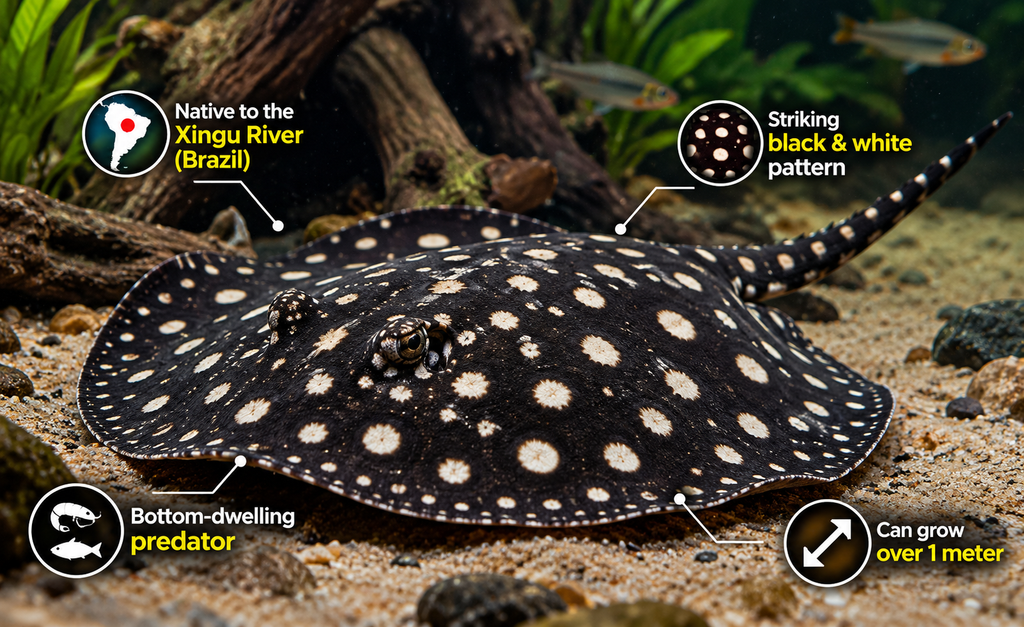
Its dark body is covered with contrasting white or pale spots and patterns, giving it the striking look that makes it so popular among exotic-fish keepers.
And yep the pattern is seriously eye-catching. 😎
🌎 Where Does It Come From?
This ray is endemic to the Xingu River drainage in Brazil, meaning its natural range is restricted to that region.
It lives in freshwater and spends much of its time close to the bottom.
FishBase records it from the Xingu River basin, including the Xingu and Fresco rivers.
So this isn’t some ocean ray that simply learned to tolerate freshwater.
It’s a true freshwater specialist. 🌊
👀 Those Spots Make It Stand Out
The black-and-white pattern is one of the biggest reasons P. leopoldi is so popular in the ornamental fish trade.
CITES documents describe it as one of the most sought-after South American freshwater stingrays, with its attractive dorsal pattern contributing to its popularity.
Basically, Mother Nature gave this ray a seriously cool designer look. 😂
🦐 What Does It Eat?
This stingray is a bottom-dwelling predator.
Its natural diet includes aquatic invertebrates such as insect larvae, crustaceans, and mollusks, along with small fish.
It can use sensory structures to help locate prey around the river bottom.
So despite its peaceful-looking glide, this ray is definitely a hunter.
📏 It Can Get Much Bigger Than You Think
Don’t let those cute juvenile rays fool you.
FishBase records P. leopoldi at up to about 111 cm (44 inches) in disc width and a published maximum weight of about 17 kg (37.5 lb).
That’s a seriously big aquarium animal.
This is one reason keeping a freshwater stingray is a major commitment rather than a casual fish purchase.
⚠️ And That Tail? Respect It.
Like other stingrays, P. leopoldi has a venomous tail spine used for defense.
That doesn’t mean the ray is looking to attack people. But accidental contact can cause serious injury, so it should never be treated like a pet you can casually handle.
Basically:
Look at it. Admire it. Give it space. 🐟⚠️
🏠 Is It an Easy Aquarium Fish?
Definitely not a beginner fish.
Its large adult size, specialized diet, sensitivity to water conditions, and need for substantial bottom space make it a demanding animal to keep.
A keeper needs to plan for its adult size, not the small size of the juvenile sold at the store.
And because freshwater stingrays produce significant waste, maintaining excellent water quality is especially important.
🚨 Why Is This Ray Important to Protect?
This is where the story gets serious.
Potamotrygon leopoldi is currently assessed as Vulnerable on the IUCN Red List. It is also listed under CITES Appendix II, meaning international trade is subject to controls and monitoring.
Its restricted natural range, habitat changes, fishing pressure, and historical collection for the ornamental aquarium trade have all raised conservation concerns.
The good news is that captive breeding has become an important source for the aquarium trade, reducing some pressure on wild populations.
🌊 Final Thoughts
The Freshwater Polka Dot Stingray is one seriously unusual aquatic animal.
Its incredible black-and-white pattern, freshwater lifestyle, large size, predatory behavior, and venomous tail make it fascinating—but definitely not a beginner aquarium species. 🐟⚫⚪
And there’s more to this ray than its looks.
Because Potamotrygon leopoldi comes from a relatively restricted natural range and faces conservation pressures, responsible captive breeding and legal, sustainable trade matter.
Beautiful? Absolutely.
Rare and exotic? You bet.
Easy to keep?
Not even close. 😂🌊