

 By
Imagine drinking seawater every day and somehow staying hydrated. 😳🌊
Sounds impossible, right?
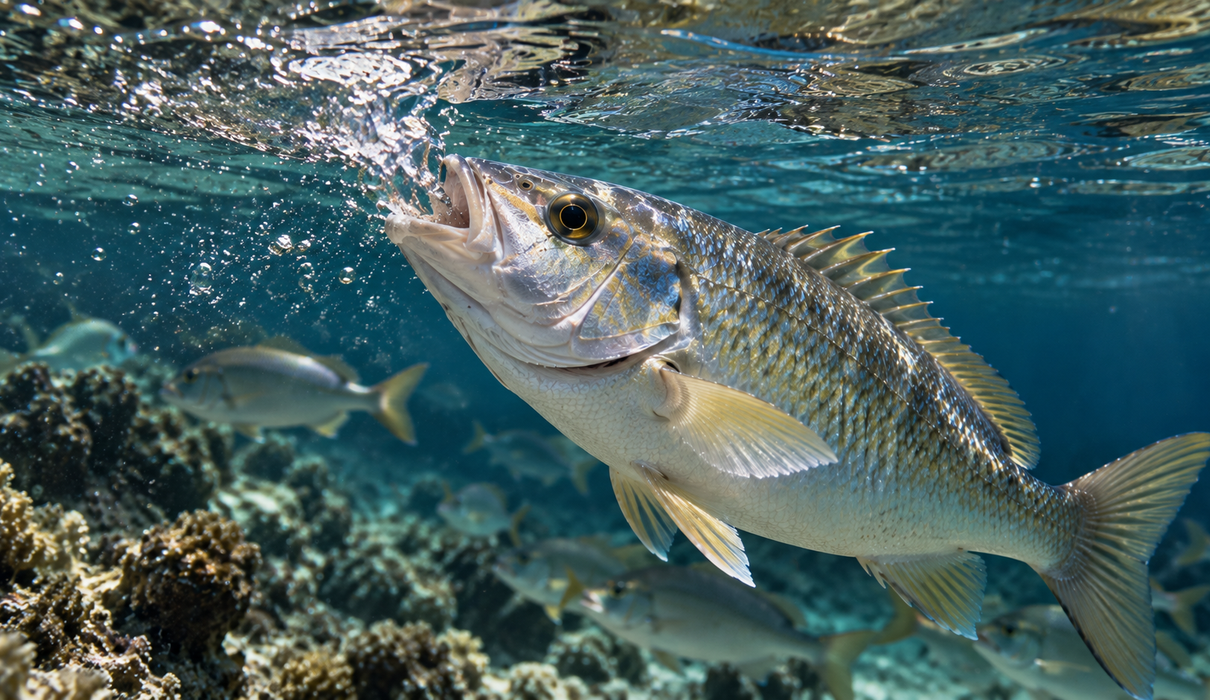
But for many marine bony fish, drinking seawater is actually an important part of staying alive.
So how do they pull it off?
🌊 Yep, Marine Fish Drink Seawater
Seawater is saltier than the body fluids of most marine bony fish.
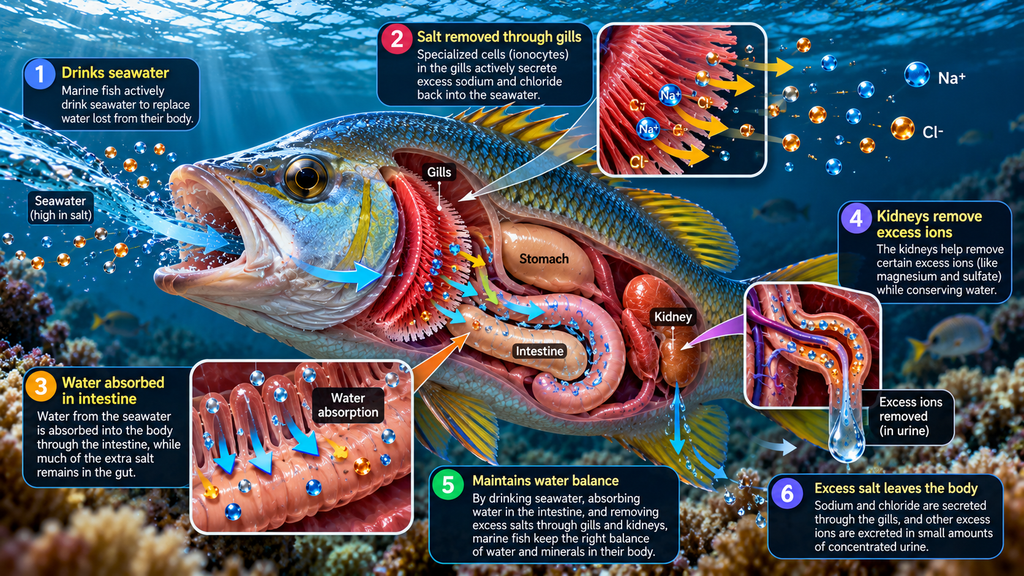
Because of this difference, they naturally lose water to the surrounding ocean through their body surfaces, especially the gills.
To replace that lost water, they drink seawater. 🐟💧
🧂 But What Happens to All That Salt?
Here’s the crazy part.
When the fish drinks seawater, its intestine absorbs water, while much of the extra salt is eventually removed from the body.
Specialized cells in the gills, often called ionocytes or mitochondrion-rich cells, actively secrete excess sodium and chloride back into the seawater.
Their kidneys also help remove certain excess ions while conserving water.
Basically, marine fish have a built-in salt-management system. 🤯
🐟 What About Freshwater Fish?
Freshwater fish face almost the opposite problem.
Their body fluids are saltier than the surrounding freshwater, so they tend to gain water and lose salts.
Instead of drinking large amounts of water, most freshwater fish produce lots of dilute urine and actively take up needed ions.
Pretty wild, right?
🌊 Final Thoughts
Marine fish aren’t magically immune to saltwater.
They’ve evolved specialized systems involving their gills, intestines, and kidneys to keep their water and salt levels balanced.
So while seawater would dehydrate a human, a marine fish is basically saying:
“No worries. I’ve got a system for that.” 😂🐟🧂🌊