

 By
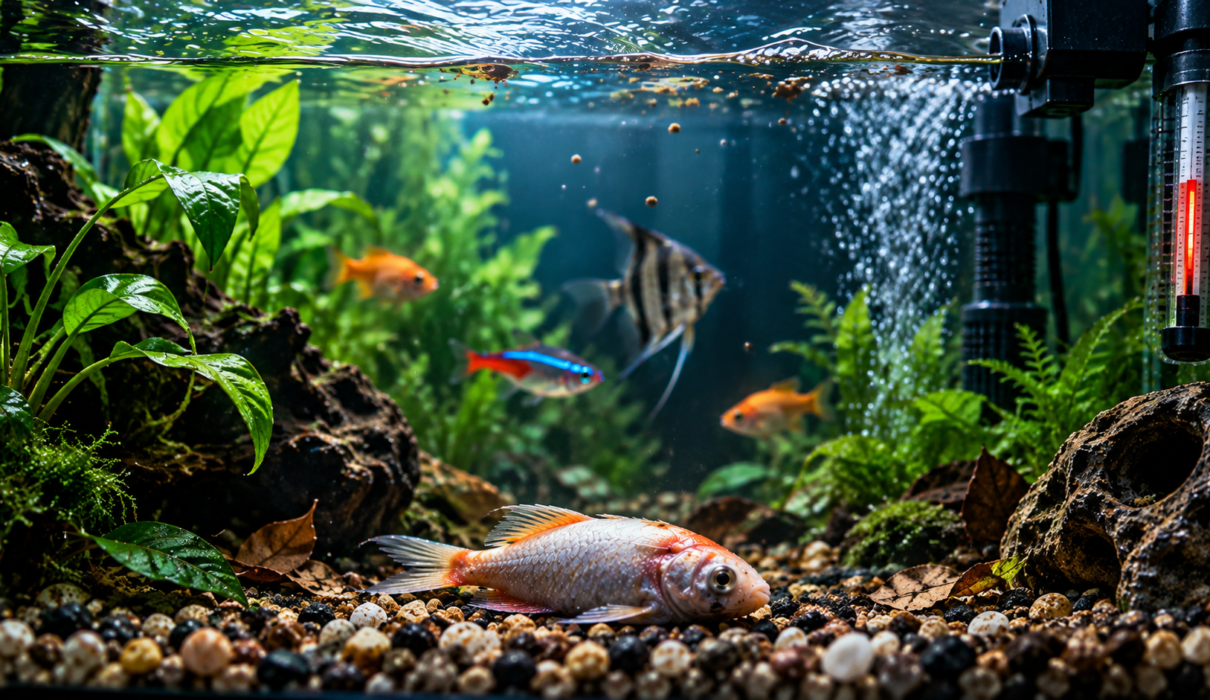
By Finding a dead fish in your aquarium is heartbreaking. 😔
And sometimes, the cause isn’t obvious.
Fish deaths can be linked to poor water quality, disease, stress, unsuitable conditions, or mistakes in aquarium care.
Here are 11 common causes every fishkeeper should know.
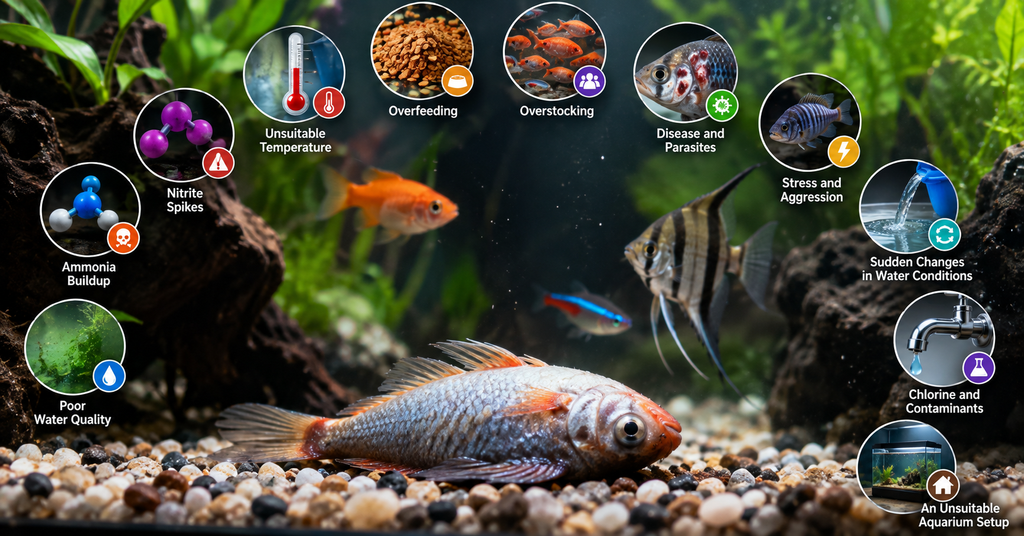
1. 💧 Poor Water Quality
Poor water quality is one of the biggest threats to aquarium fish.
Ammonia, nitrite, nitrate, pH, temperature, and other water conditions all matter. Fish need stable conditions that are suitable for their species.
2. ☠️ Ammonia Buildup
Ammonia comes from fish waste, decaying organic matter, and uneaten food.
In a properly established aquarium, beneficial microorganisms help process ammonia. But if the biological filtration isn’t established or becomes disrupted, ammonia can build up and seriously harm fish.
3. 🧪 Nitrite Spikes
Nitrite is another dangerous water quality problem.
High nitrite levels can interfere with a fish’s ability to transport oxygen in its blood, potentially causing serious stress or death.
That’s why testing for both ammonia and nitrite is so important, especially in new or unstable aquariums.
4. 🌡️ Unsuitable Temperature
Fish are ectothermic, meaning their body temperature is strongly influenced by their surroundings.
If the water is consistently too hot, too cold, or changes too quickly, fish can become stressed and may have trouble functioning normally.
Always check the temperature range recommended for your species.
5. 🍽️ Overfeeding
More food doesn’t mean healthier fish.
Uneaten food can decay and contribute to waste and poor water quality. Overfeeding can also contribute to obesity and other health problems in some fish.
Feed an appropriate amount and avoid letting excess food pile up.
6. 🐟 Overstocking
Too many fish can put a serious strain on an aquarium.
More fish means more waste and greater demand on filtration and oxygen. Overcrowding can also increase competition and stress.
A tank isn’t just about how many fish physically fit inside it needs enough space and resources for the species being kept.
7. 🦠 Disease and Parasites
Fish can develop bacterial, fungal, parasitic, and other health problems.
Watch for warning signs such as loss of appetite, unusual swimming, rapid breathing, wounds, abnormal spots, or major changes in behavior.
Finding problems early can make treatment much more effective.
8. 😰 Stress and Aggression
Constant chasing, bullying, poor hiding spaces, unsuitable tank mates, and sudden environmental changes can stress fish.
Different species also have different temperaments and social needs, so compatibility matters.
A peaceful-looking tank isn’t necessarily a peaceful tank.
9. 🧪 Sudden Changes in Water Conditions
Fish can become stressed when water chemistry or temperature changes rapidly.
When performing a water change, use properly conditioned water and avoid making unnecessary, dramatic changes to the aquarium’s conditions.
Consistency is key.
10. ☠️ Chlorine, Chloramine, and Other Contaminants
Untreated tap water may contain chlorine or chloramine, which can be harmful to fish.
Household cleaners, soaps, pesticides, and other chemicals can also contaminate aquarium water.
Always use an appropriate water conditioner for tap water and keep chemicals far away from the tank.
11. 🏠 An Unsuitable Aquarium Setup
Every fish has different needs.
A species may struggle if the aquarium doesn’t provide enough space, suitable water conditions, proper filtration, hiding places, or compatible tank mates.
Before buying a fish, learn what it actually needs not just what looks good at the store. 🐟
🌊 Final Thoughts
Fish usually don’t die completely “out of nowhere.”
There may be a problem with water quality, disease, temperature, feeding, stress, compatibility, or the overall aquarium setup.
If you’re losing fish, don’t immediately replace them. Test the water, check the tank conditions, look for signs of disease, and figure out what went wrong first.
A healthy aquarium isn’t about luck.
It’s about creating stable, suitable conditions and paying attention to what your fish are telling you. 🐟💧