

 By
By Ever watched a bunch of Neon Tetras zoom around your aquarium and thought, “Why are these little guys always together?” 😄
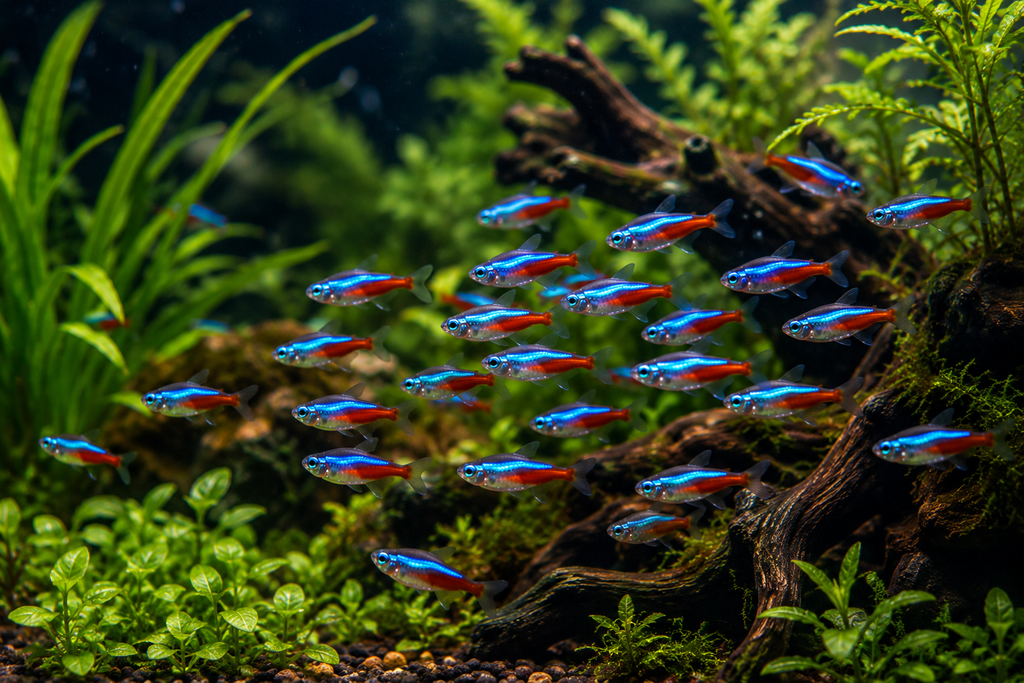
It’s not random. Neon Tetras are social fish that naturally stay in groups, especially when they feel threatened. This behavior can involve both shoaling and schooling, depending on how closely and how coordinately they move.
🛡️ Safety in Numbers
In the wild, a tiny fish swimming alone can be an easy target for predators.
Staying in a group can make it harder for a predator to focus on one fish. When many fish move together, the predator has more targets to choose from, which can reduce the risk to any individual fish.
Basically, there’s strength in numbers. 🐟🐟🐟
👀 They Pay Attention to Each Other
Neon Tetras use visual cues from nearby fish to coordinate their movements.
If one fish suddenly changes direction, others can quickly react. That’s why you might see the whole group suddenly turn almost at the same time.
One moves… and the whole crew follows! 😂
🌊 Shoaling or Schooling?
You may hear both words used for groups of fish, but there’s a slight difference.
Shoaling generally means fish staying together as a group, while schooling usually describes fish swimming together in a more coordinated and synchronized way.
Neon Tetras can show both behaviors. They may spread out while exploring and then move closer together when they feel threatened.
🏠 Why Groups Matter in an Aquarium
Neon Tetras generally do best when kept with other Neon Tetras rather than alone.
A proper group gives them the chance to display more natural social behavior, such as swimming together, exploring their surroundings, and responding to each other.
A lone Neon Tetra may behave differently because it doesn’t have the social environment it naturally experiences with its own species.
✨ That Famous Neon Glow
There’s another reason groups of Neon Tetras are so fun to watch.
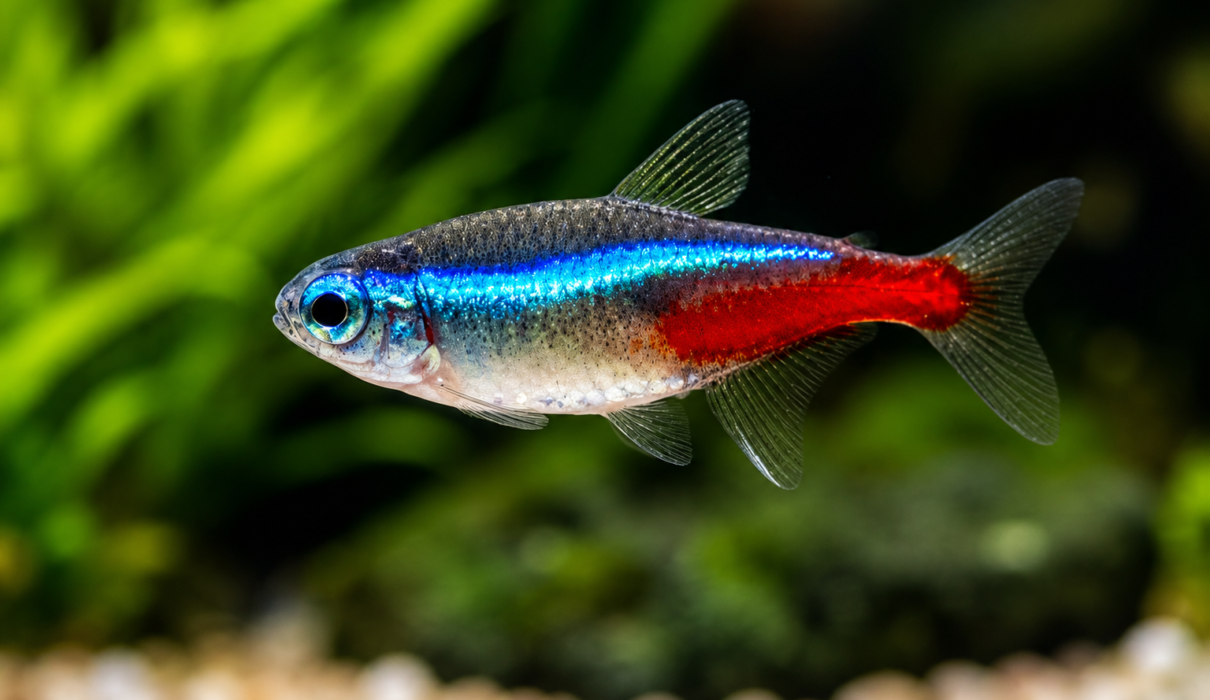
Their bright blue and red markings flash as they move through the water. When the whole group turns at once, it can look like a tiny neon light show. 💙❤️
And honestly, that’s a big part of their charm.
🐟 Final Thoughts
Neon Tetras don’t stay together just because they look cool as a group.
Their group behavior is connected to social interaction, predator avoidance, and responding to their surroundings.
So the next time your Neon Tetras suddenly turn in perfect formation, take a closer look.
You’re watching one of the coolest behaviors that makes these tiny freshwater fish so fascinating. 🐟🌊✨