

 By
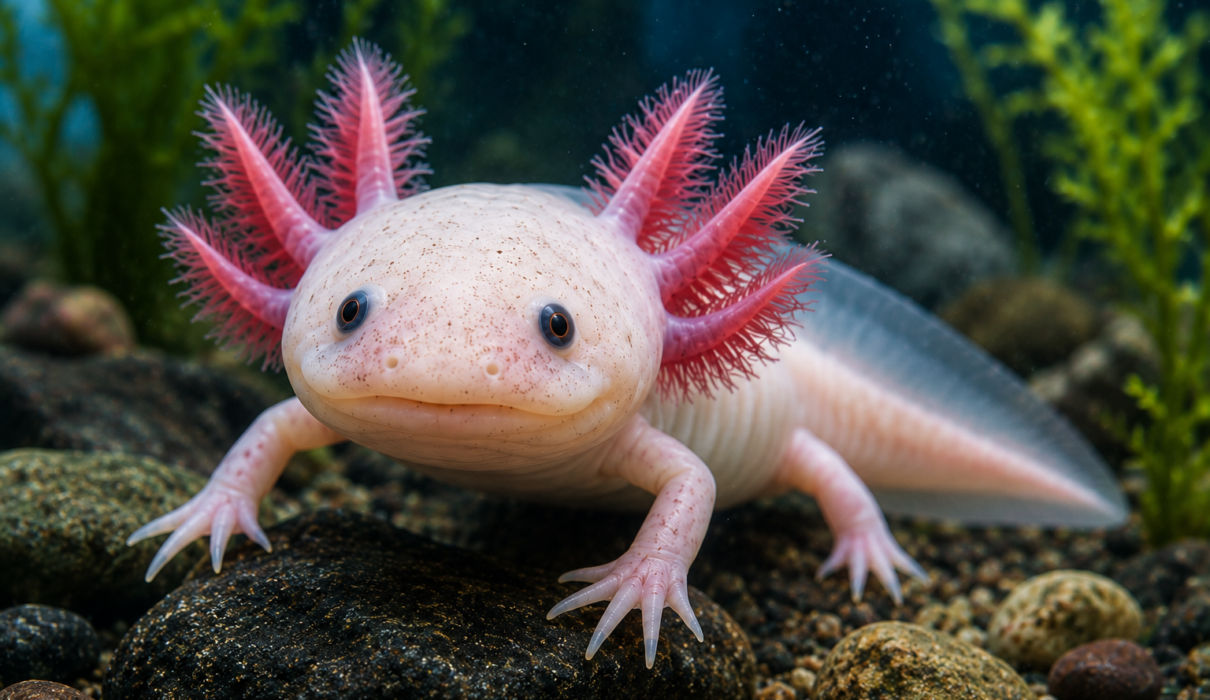
By If you think aquatic animals are just fish, meet the axolotl one of the strangest and most fascinating creatures in the aquatic world.
With its tiny legs, feathery external gills, and permanent baby like appearance, the axolotl looks almost unreal. But what really makes this salamander special is its incredible ability to regenerate many damaged or lost body parts.
🦎 What Is an Axolotl?
The axolotl (Ambystoma mexicanum) is a salamander native to the Xochimilco area of Mexico City.
Unlike many other salamanders, axolotls normally keep their juvenile features and remain aquatic throughout their lives. This biological trait is known as neoteny.
🤯 What Can an Axolotl Regrow?
This is where things get seriously wild.
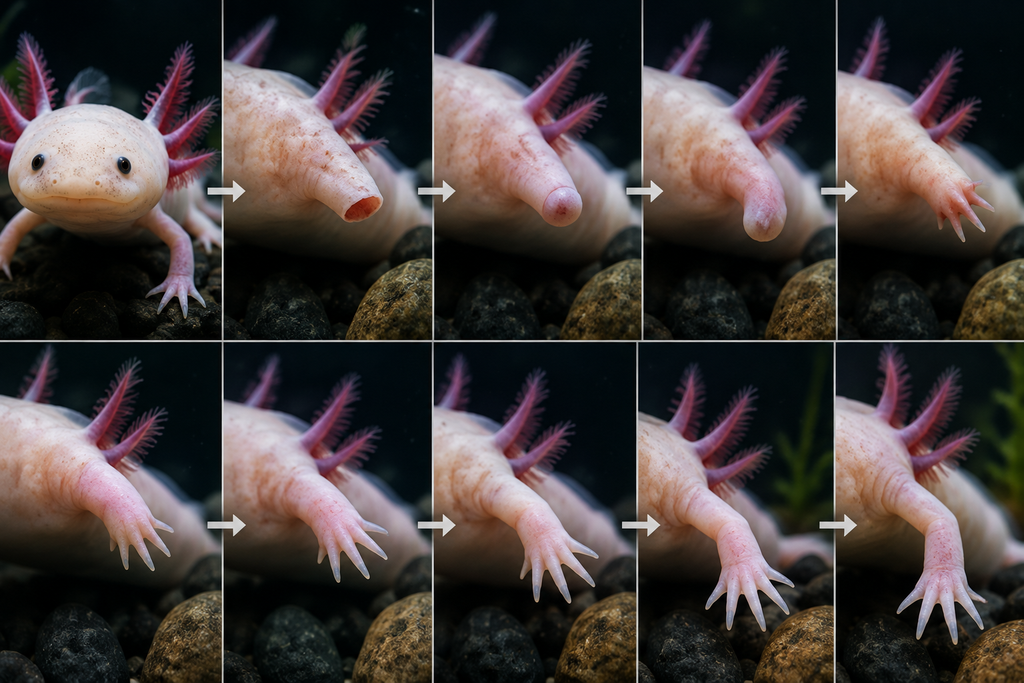
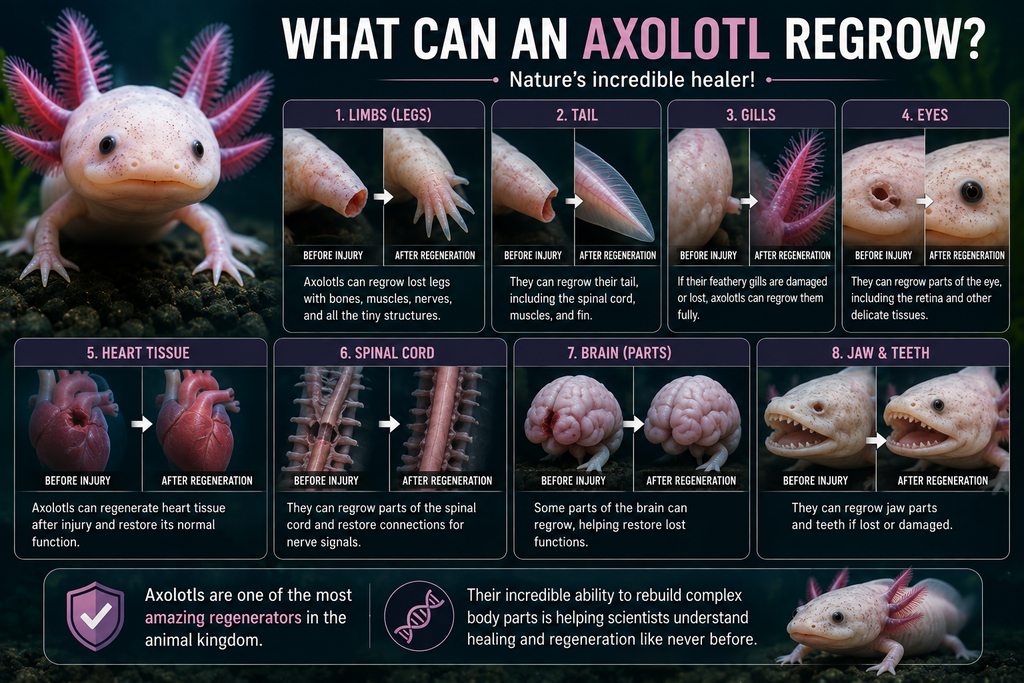
Axolotls can regenerate limbs, tails, parts of the spinal cord, and several other tissues and organs. Research has also documented regeneration involving tissues of the heart and parts of the nervous system.
And here’s the really cool part: regeneration isn’t simply the body closing the wound. The axolotl can rebuild complex structures with the correct types of tissues.
Scientists are still working to understand exactly how this remarkable ability works.
🧬 How Does Regeneration Work?
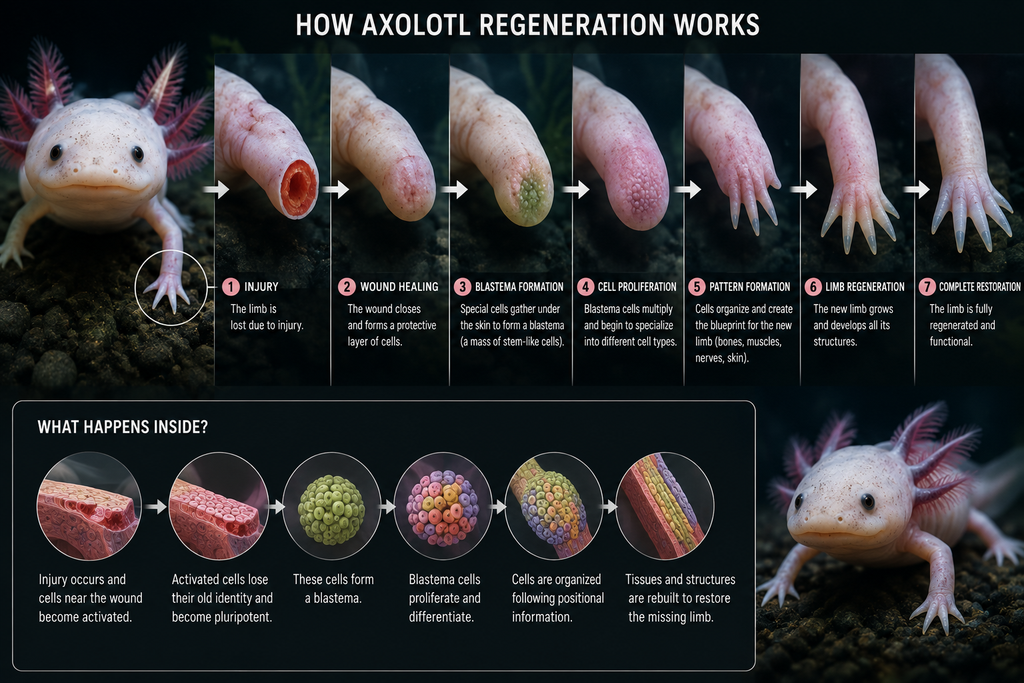
fter an injury, cells around the damaged area become involved in rebuilding the missing structure.
A specialized collection of cells called a blastema forms at the injury site. These cells multiply and contribute to the formation of tissues needed to rebuild the lost body part.
Researchers study this process because understanding axolotl regeneration could provide useful insights into tissue repair and regenerative medicine. However, scientists have limbs, tails, parts of the spinal cord, and several other tissues and organs like axolotls can.
🌊 Where Do Axolotls Live?
Wild axolotls are native to the Xochimilco area of Mexico City, where their remaining natural habitat consists mainly of freshwater canals and wetlands.
Their wild population faces serious threats from habitat loss, pollution, and introduced species, making conservation of their natural habitat extremely important.
🍽️ What Do Axolotls Eat?
Axolotls are carnivorous amphibians. They feed on small aquatic animals and other prey available in their environment.
Their diet can include organisms such as worms, small crustaceans, insect larvae, and other small aquatic creatures.
💚 Why Are Axolotls So Special?
Axolotls aren’t famous just because they look cute. Their incredible regenerative abilities have made them an important research animal for studying regeneration and tissue repair.
From their unusual appearance to their ability to rebuild complex body structures, axolotls show us just how amazing nature can be.
Cute? Definitely. Weird? Absolutely. Amazing? No doubt. 🦎🌊
🧠 Quick Fact
Axolotls can regenerate lost limbs and other complex body structures, which is one reason scientists have studied them for more than a century.
🌊 Final Thoughts
The axolotl is one seriously fascinating aquatic animal. Its unusual appearance, fully aquatic lifestyle, and incredible ability to regenerate lost body parts make it unlike almost any other amphibian.
But beyond being a cool animal, the axolotl also reminds us how much we still have to learn from nature. Protecting its natural habitat is just as important as studying its amazing biology.
Small animal, huge abilities-the axolotl is truly one of nature’s coolest surprises. 🦎🌊
Discover. Learn. Explore.
Aquarist World – Discover a World of Endless Aquatic Life.